
First Services Group
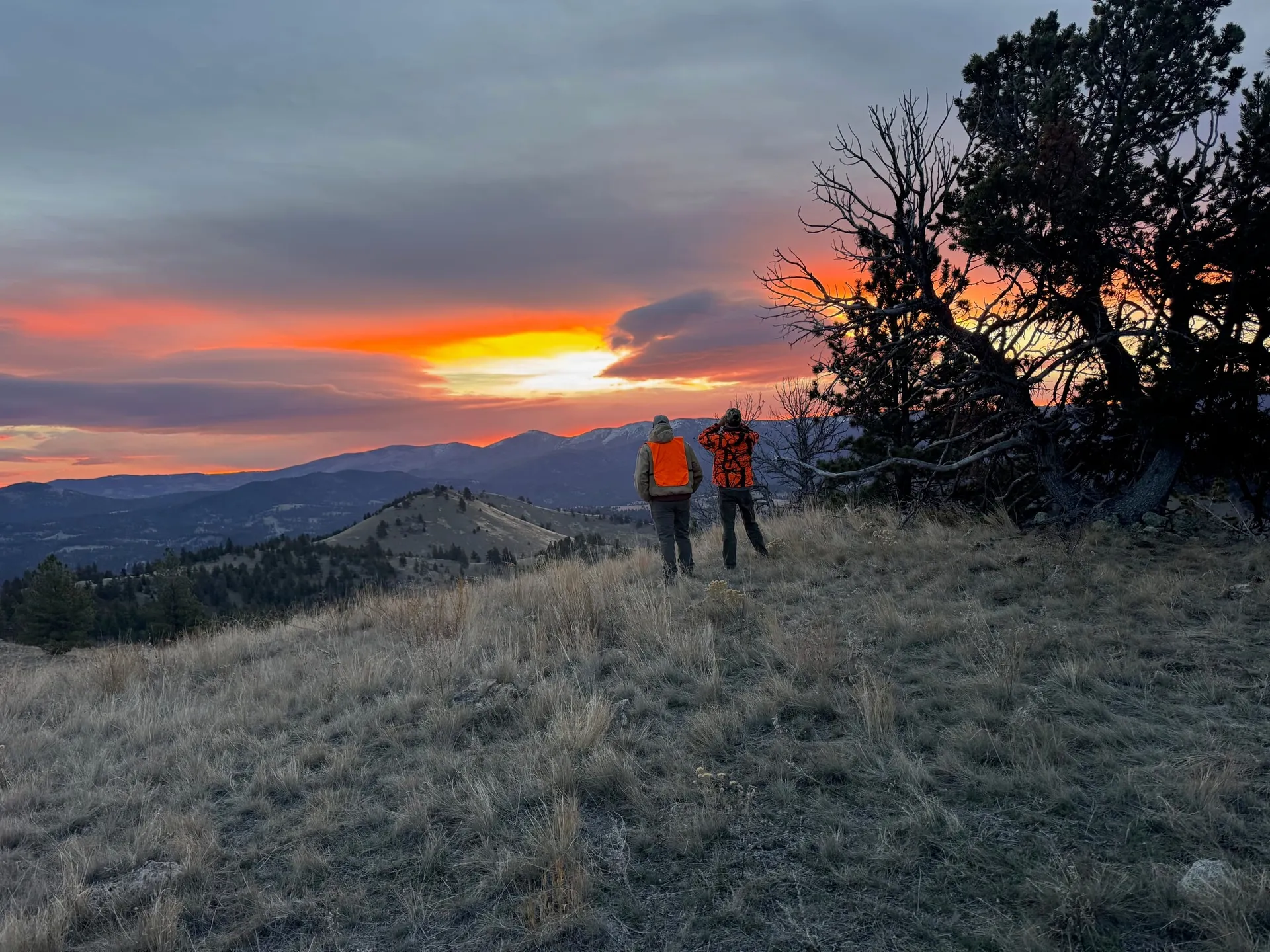
Two figures overlooking Montana mountain sunset from the First Services Group ranch ridgeline

Heritage

The Devil's Brigade trained in Helena. FSG trains in these mountains today.

The First Special Service Force was raised at Fort William Henry Harrison, just west of Helena, in 1942. Here is the sourced history, and how FSG carries that tradition into modern training.

The First Special Service Force

A new kind of unit, built in Montana

The First Special Service Force was raised and trained at Fort William Henry Harrison, just west of Helena, from July 1942 to April 1943. It was a combined American and Canadian force of volunteers: a combat echelon of about 1,800 men, backed by a service battalion of about 800.

Forcemen jumped from C-47s over the Helena Valley, climbed Mount Helena, and learned to ski and survive the winter on the Continental Divide near Blossburg and Mullan Pass before parading down Last Chance Gulch on 6 April 1943.

The Force grew out of Project PLOUGH, a planned winter raid on hydroelectric targets in occupied Norway that was abandoned before it began. The unit went on to fight in the Aleutians, Italy and southern France.

Days of combat
251
in combat, by the count in Public Law 113-16
Casualties
2,314
suffered in those 251 days
Canadian
1/3
of the Force, with Canadians commanding five of six battalions
Months in Helena
9
July 1942 to April 1943

Why Montana

Why Montana: the terrain that built the Force

Fort Harrison was chosen for what the surrounding country offered a unit that had to parachute, climb and fight in winter.

  • Flat valley floor

    The Helena Valley gave paratroopers open ground for jump training from C-47 aircraft.

  • Peaks near 9,000 feet

    Mountains ringed the fort, close enough for mountaineering, climbing and long marches.

  • Real Montana winters

    Snow and sub-zero cold gave the Force real winter conditions to train in.

FSG trains in these mountains today: forested ridgelines, open ground and four seasons of weather, in the Helena and Continental Divide country of west-central Montana.

The public record

Where the Force trained around Helena

These four sites are documented. Anything beyond them is legend, and we do not repeat it.

  • Fort William Henry Harrison

    Just west of Helena. Obstacle courses, weapons and demolitions training, and parachute jumps from C-47 aircraft.

  • Helena airport

    Airborne training alongside the fort. The field is now Helena Regional Airport.

  • Mount Helena

    Climbing training on the peak that rises directly above downtown Helena.

  • Blossburg and Mullan Pass

    Winter exercises in January 1943 on the Continental Divide approach, roughly 13 to 15 miles west of Helena, photographed in white camouflage by Canadian Army photographers.

Nine months in Helena

Three phases of training

  1. Phase 1

    Individual skills

    August to October 1942

    Parachuting, weapons, demolitions, small-unit tactics and conditioning. Soldiers began jumping within 48 hours of arriving.

  2. Phase 2

    Unit tactics

    October to November 1942

    Unit tactics, building on the individual skills of the first phase.

  3. Phase 3

    Winter and mountain

    November 1942 onward

    Skiing, rock climbing, cold-climate adaptation and operating the Weasel over-snow vehicle. Norwegian instructors led the ski training from December.

From Helena to southern France

The Force's campaigns

Five campaigns, from the Aleutian Islands to southern France.

  1. July 1942

    Activated at Fort William Henry Harrison

    Helena, Montana

    The First Special Service Force, a combined U.S. and Canadian unit of volunteers, is activated just west of Helena. Official Army lineage gives 9 July 1942; some unit histories give 20 July.

  2. 6 April 1943

    Farewell parade down Last Chance Gulch

    Helena, Montana

    After roughly nine months of training in the Helena area, the Force parades through downtown Helena. It leaves by rail a week later.

  3. 15–16 August 1943

    Kiska

    Aleutian Islands campaign

    The Force goes ashore by rubber boat in its first combat operation. The Japanese garrison had already evacuated the island.

  4. 2–3 December 1943

    Monte la Difensa

    Naples-Foggia campaign

    A night assault up a cliff face the defenders thought unclimbable. The summit is secured in about two hours, against the four to five days higher command had allowed.

  5. February to May 1944

    Anzio: 99 days on the right flank

    Anzio campaign

    The Force holds its sector without relief and sends night patrols behind German lines. German troops come to call them the "Black Devils".

  6. 4 June 1944

    Into Rome

    Rome-Arno campaign

    The Force is among the first Allied troops to enter Rome.

  7. 14–15 August 1944

    Port-Cros and Île du Levant

    Southern France campaign

    The Force captures the two islands, protecting the flank of the Seventh Army landing in southern France.

  8. 5 December 1944

    Final formation

    Villeneuve-Loubet, France

    The Force holds its last formation and cases its flag. Formal disbandment follows on 6 January 1945.

Honors and lineage

Recognized by Congress, carried on by today's forces

Congressional Gold Medal

Public Law 113-16, enacted on 12 July 2013, awarded the Force a Congressional Gold Medal. It was presented in Emancipation Hall at the U.S. Capitol on 3 February 2015, and the law directs the medal to the First Special Service Force Association in Helena. The U.S. Mint called it the first Congressional Gold Medal to honor a Canadian military contingent.

A living lineage

The U.S. Army's Special Forces Groups trace their official lineage and honors to the Force's activation in July 1942. Canada's special operations regiment carries the Force's battle honors and perpetuates its character.

Helena remembers

Memorials in and around Helena

Helena adopted the Forcemen as its own while they trained, and it still keeps their memory.

  • Memorial Park, Helena

    The Force’s monument, dedicated by surviving veterans in August 1947, stands beside a cenotaph listing 488 names.

  • Montana Military Museum, Fort Harrison

    An all-volunteer museum with an extensive First Special Service Force exhibit. Admission is free; check hours and gate requirements before you go.

  • Fort Harrison grounds

    Streets named for the Force’s battles, and the Marshall Field Drop Zone, still bear the unit’s history.

  • Montana State Veterans Cemetery

    A monument at the cemetery at Fort Harrison honors the men of the Force.

Getting the history right

What the record says, and what it does not

  • Not a unit of convicts. Recruiters sought lumberjacks, forest rangers, hunters and game wardens. The stockade story comes from a 1968 film, which was shot in Utah and Italy rather than Montana.
  • Two activation dates. Official Army lineage records 9 July 1942. The Montana Military Museum and the Force's own association use 20 July.
  • No private ranch is claimed. The public record names Fort Harrison, the Helena airport, Mount Helena and Blossburg. FSG's ranch is not presented as a historic site.

Training in these mountains

Programs that draw on the same disciplines

Mountain movement, winter operations and small-unit tactics are still the core of what a unit learns here in Montana.

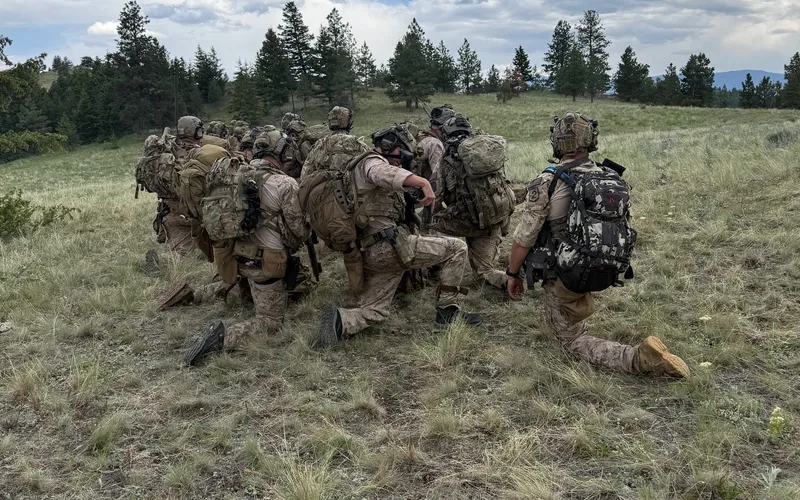
  • Training participants conducting field exercises in Montana terrain

    4 Weeks · Advanced Operations

    Advanced Operations Training

    Intensive field training program drawing on the legacy of the First Special Service Force. Covers advanced tactics, land navigation, survival, and field operations in rugged Montana terrain.

    Experienced Professionals · Veterans · Allied Forces
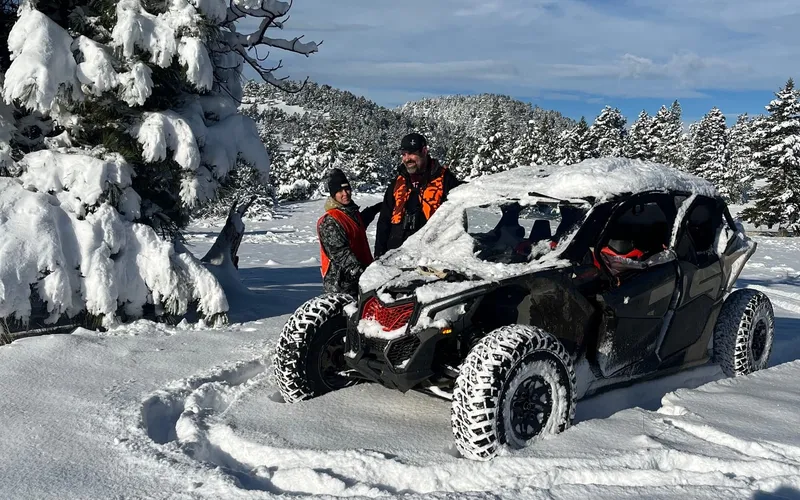
  • Winter scene with utility vehicle navigating snow-covered Montana mountain trails at FSG

    2 Weeks · Advanced Operations

    Winter Operations & Cold Weather Training

    Specialized training in cold weather survival, winter movement techniques, and operations in snow-covered mountainous terrain.

    Experienced Professionals · Mountain Units · Arctic-Deploying Forces

Train in the country that built the Force

Tell us about your unit, your objectives and your timeline. We will build a program around them.